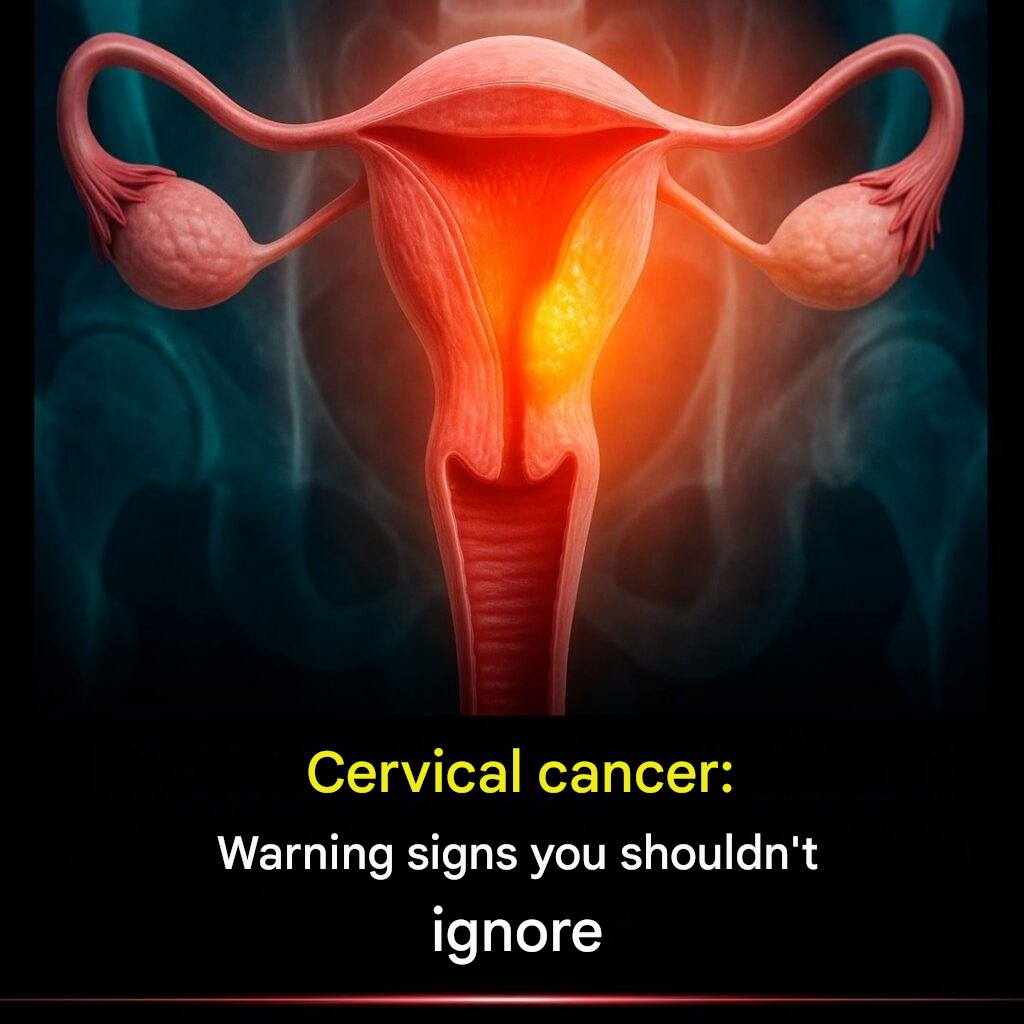
Interpreting these silent signs allows for early detection and more effective treatment. Monitoring them is essential.
A widespread virus… but one that must be taken seriously.
The main culprit? The human papillomavirus (HPV). This extremely common virus is primarily transmitted through sexual contact and affects most sexually active people at some point in their lives. The good news? Our bodies usually clear it spontaneously. However, some variants (particularly types 16 and 18) can persist and cause cellular abnormalities that, without treatment, can develop into malignant tumors.
Warning signs: When to worry?
In its early stages, this condition often develops silently. But as it progresses, certain signs may appear:
Unexpected bleeding: between periods, after sexual intercourse, or after menopause.
Abnormal vaginal discharge: heavier, foul-smelling, or of an unusual color.
Persistent pain in the lower abdomen or lower back, unrelated to menstruation.
Discomfort or bleeding during intercourse.
Urinary problems: a feeling of incomplete bladder emptying or blood in the urine.
If these signs appear, an immediate gynecological consultation is necessary.
See continued on the next page.

High School Quarterback Honors Childhood Promise To Girl With Down Syndrome — Takes Her As His Prom Date

‘Bride-To-Be’ Runs Off With $900 Of Salon Services So Staff Calls Her Out In Public To Get Payback

Judi Dench Admitted She ‘Can’t See Anymore’ In Candid Interview

Your fingers can tell you a lot about your personality. What kind of fingers do you have?

Devoted Dad Raises Son With Down Syndrome Alone After Wife Wanted To Give Him Up