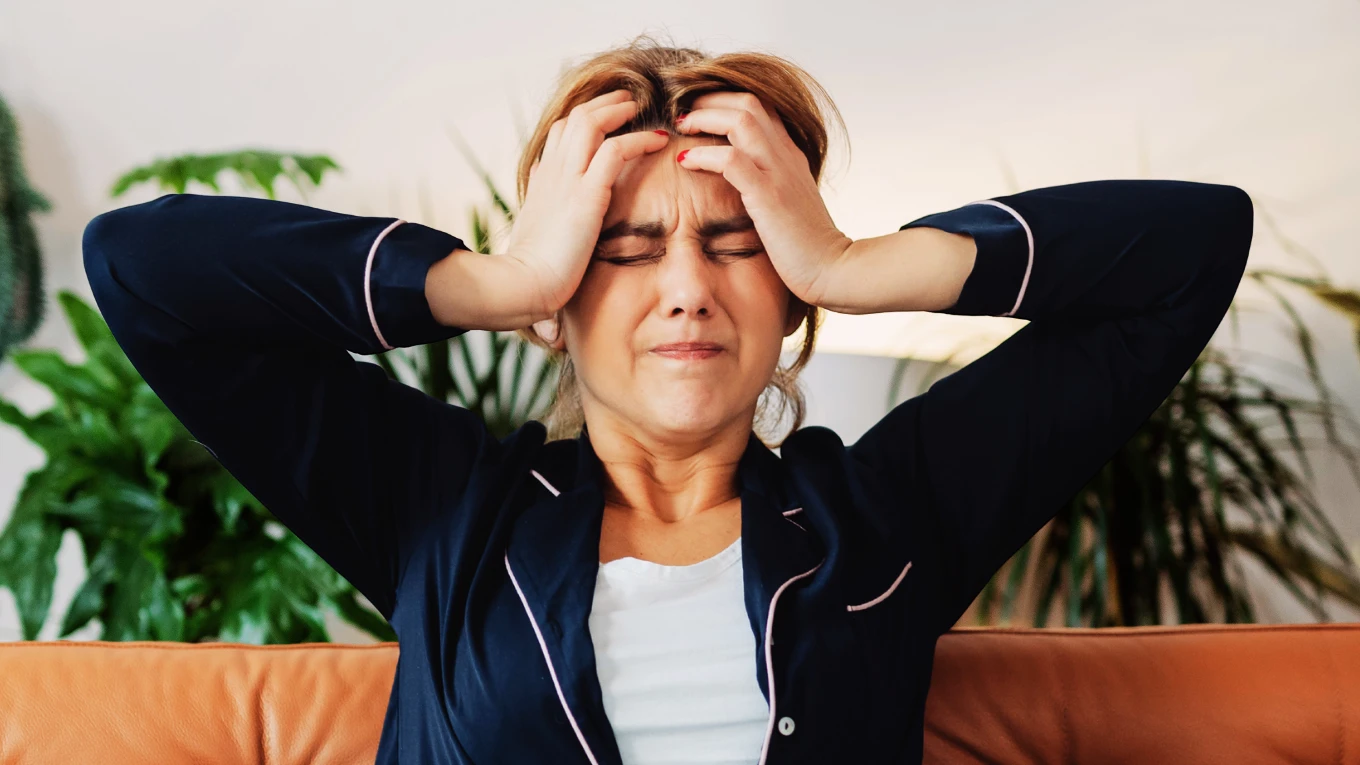
Migraines are more than just "really bad headaches." They're complex neurological events that can completely change how your body feels, how you think, and even how you see. For some, migraines start with throbbing pain behind one eye. For others, it's dizziness, tingling skin, or even a burst of electric shock-like sensations in the head or neck. Because migraines show up so differently from person to person, it's easy to mistake them for something else — or worse, to feel like no one understands what you're going through.
The hardest part about living with migraines isn't just the pain itself. It's trying to explain it to people who've never experienced one. But the more you understand your symptoms, the easier it is to get the care and empathy you deserve. These 12 migraine symptoms help explain why your headaches feel so different — and can help you recognize the signs that what you're dealing with isn't "just a headache."
If you've ever had a headache that feels different, these 12 migraine symptoms explain why:
1. Buzzing electricity
woman with buzzing electricity as a migraine symptomProstock-studio / Shutterstock
Migraines make your brain feel electrified. You might feel regular shocks on your head or residual burning pain as if an electrical current is making its way through your brain.
Typically, electrical pain starts at the base of your skull and can radiate to your scalp. Occasionally, the feeling may also be felt in your neck, and all affected areas may be tender after an episode.
RELATED: It’s Not Just Stress — 10 Spiritual Reasons You Might Be Getting Chronic Headaches
2. Loss of feeling
woman who has the migraine symptom of loss of feeling fizkes / Shutterstock
Sometimes, during a migraine attack, you might lose feeling in a part of your face or your limbs. This stroke-like symptom can be incredibly scary, especially if you've never experienced it before.
The numbness can last for a few hours and may be accompanied by speech problems, muscle weakness, or confusion. Research has found that during the aura phase, a spreading wave of neurological disruption happens, which can cause temporary sensory symptoms.
RELATED: If Life Suddenly Feels 'Off,' These 15 Signs Mean You’re Shifting Into A New Reality
3. Throbbing head pain
woman who has a migraine with the symtom of a throbbing in her headFarknot Architect / Shutterstock
Throbbing is one of the most common symptoms of a migraine. Pulsing sensations tend to be felt in only one side of the head and can continue for days if you're unlucky. The throbbing can get so extreme that your balance and coordination may be affected.
The throbbing is linked to the activation of the trigeminal nerve, which is the brain's main sensory nerve for the head. The trigeminal nerve can also cause cranial blood vessels to dilate. Research has concluded that this, combined with the nature of blood flow from the heart, is thought to be a primary cause of the 'throbbing' sensation.
RELATED: Chronic Migraines Made Daily Life Unbearable — Until I Tried This Ancient Technique
4. Light sensitivity
man who has a migraine with the symptom of light sensitivitysiro46 / Shutterstock
Known as photophobia, this is another common migraine symptom. Bright lights often become burdensome when a migraine first hits, encouraging you to find a dark space to relax in.
Wearing an eye mask and just turning off lights and electronic devices are great ways to prevent the discomfort that you feel when looking at light. Doctors use this migraine symptom to diagnose many chronic migraine sufferers.
RELATED: The Miracle Cure That Could Put An End To Your Migraines Before They Even Begin
5. Blurry vision and auras
woman who has a migraine with the symptom of blurry visionKateryna Onyshchuk / Shutterstock
Vision changes, including blurred vision and the temporary loss of vision, can occur during migraine attacks. You may see flashes of light, blind spots, and other floating objects in your field of view. These visual signs are known as auras and are a symptom of classic migraines.
This is caused by a temporary wave of electrical and chemical activity moving across the brain. Research has found that when this wave passes through the visual cortex, it disrupts normal brain cell function, leading to visual disturbances.
RELATED: The Physical Symptom That Manifests When You Aren't Living As Your True Self
6. Pain with touch
man who has the migraine symptom of pain with touchPhotoroyalty / Shutterstock
Gentle touches that usually don't hurt you may be painful during a migraine attack. Brushing your hair, laughing, and showering may trigger intense pain throughout your body. However, migraine sufferers often experience allodynia only on their head. If you're like me, then the pain might even come when you place your head on a pillow.
RELATED: 7 Quiet Cries For Help From Your Body That Most People Don't Realize Are Depression
7. Stiffness and tension
woman who has a migraine with the symptoms of stiffnessmapo_japan / Shutterstock
Moving can be more difficult when migraines are involved. Your jaw might feel as if it's wired shut, and your neck may not turn so smoothly.
If you have a tension migraine headache, then you may also be clenching your shoulder, back, and neck muscles without even realizing it.
Important note: A stiff neck may be a sign of a more serious health condition, so contact your doctor to rule out other issues.
RELATED: The Silent Strain: How Anxiety Sneakily Manifests In The Body And Wreaks Havoc
8. Dizziness or light-headedness
woman who has the migraine symptom of light-headednessPeopleImages / Shutterstock
Migraines make a lot of people feel dizzy and faint. Vestibular migraines (i.e., migraines that cause vertigo) can be dangerous if not treated carefully. If you feel light-headed during a migraine headache, then you should change positions slowly and drink lots of fluids. You should also avoid looking up or down while walking.
The brain integrates signals for balance from the inner ear, eyes, and body, research has shown. During a migraine, chemical and blood flow changes in the brain can distort the signals from the inner ear, leading to a feeling of being off-balance or that the room is spinning.
RELATED: 11 Ways Your Body Warns You That You’re Neglecting Your Mental Health
9. Ringing in your ears (tinnitus)
woman who has ringing in her ears as a migraine symtpomKittyfly / Shutterstock
Migraines are linked to tinnitus and other hearing disturbances. Auras may cause the ringing, but it may occur without an aura.
The ringing in your ears during migraines is high-pitched, sometimes replacing other sounds in the room. The duration of tinnitus episodes varies.
Studies show a higher prevalence of tinnitus in people with migraines compared to those without — a substantial percentage of migraine sufferers with tinnitus report that their tinnitus intensifies during a headache episode.
RELATED: Think You’re Just Unlucky? 7 Chilling Signs You’ve Been Targeted By Dark Energy Or Black Magic
10. Pressure in your head
woman feeling pressure as a migraine symptomAntonio Guillem / Shutterstock
Tightness or a squeezing feeling around your head is a common migraine symptom. The pressure can be throughout your head or centralized to a certain part.
It might feel like you have a head cold. For adults, stress migraines are likely the culprits of this symptom.
RELATED: 8 Headache-Inducing Foods That Cause Immense Migraines
More for You:
15 Ways Women's Bodies Change As We Age (That Are Nothing To Be Ashamed Of)
What The Age Of Your First Period Reveals About You
The Most Powerful Phrase You Can Possibly Say To Someone Who Is Struggling
How To Manifest EXACTLY What You Want (And Actually Get It)
11. Nausea and stomach upset
woman who feels nausea as a migraine symptomNicoleta Ionescu / Shutterstock
Stomach issues like nausea and vomiting are common symptoms as well. Because migraines are disorienting, you may feel uneasiness in your stomach or have to use the restroom more frequently.
Certain foods may make you feel sick, and doing anything (besides sleeping) can upset your stomach. Nausea can be a symptom that appears before the headache itself, suggesting it is not a direct result of the pain but a central neurological event, one study argued.
RELATED: 3 Bizarre Body Quirks That Are Actually Signs Something Might Be Deeply Wrong
12. Pins and needles
man who has pins and needles as a migrain symptomDragana Gordic / Shutterstock
You know the feeling. It's like when your foot falls asleep because you've been sitting on it. But, this time, it's your head that's falling asleep — and maybe parts of your face.
Research has explained that this wave of neural firing and subsequent suppression temporarily alters blood flow and nerve function in the affected area, leading to sensory disturbances. A bunch of pinpricks jamming into your skull isn't exactly pleasant.
RELATED: 6 Nagging Signs Your Soul Is Begging You To Slow Down, According To Experts
Meaghan Summers is a freelance editor for Sourcebooks, an independent consultant for Fiverr, and an associate editor for Defense Security Cooperation University. Her writing covers mental health, pop culture, and relationship topics.