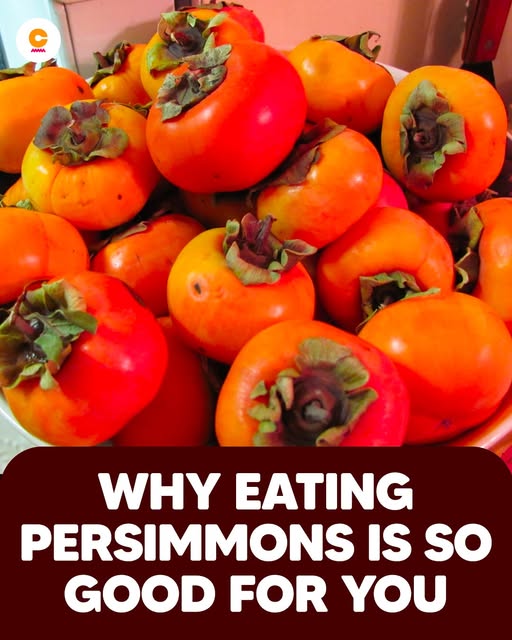
There are over a hundred types of persimmons but the two most popular are the Hachiya and Fuyu varieties. Hachiya persimmons are high in plant chemicals called tannins and they give the unripe fruit a dry and bitter taste.
That’s why the hachiya persimmon has to be ripe before it can be consumed. In contrast, fuyu persimmons can be enjoyed before they are fully ripe. This is not to say they don’t contain tannins; they do, however the quantity is considerable less enough for them to be classified as astringent.
Persimmons can be enjoyed fresh, dried and cooked. They are commonly used globally in jellies, drinks, pies, curries, and puddings. Below are some health benefits associated with persimmons.
1. They are nutrient dense

Persimmons may be small but they are packed with a healthy amount of nutrients. They are also a great source of thiamin (B1), riboflavin (B2), folate, magnesium, and phosphorus.
One persimmon contains:
- Calories: 117.6
- Carbs: 31.23 grams
- Protein: 0.97 gram
- Fat: 0.32 grams
- Fiber: 6.05 grams
- Vitamin A: 55% of the RDI
- Vitamin C: 22% of the RDI
- Vitamin E: 6% of the RDI
- Vitamin K: 5% of the RDI
- Vitamin B6 (pyridoxine): 8% of the RDI
- Potassium: 8% of the RDI
- Copper: 9% of the RDI
- Manganese: 30% of the RDI